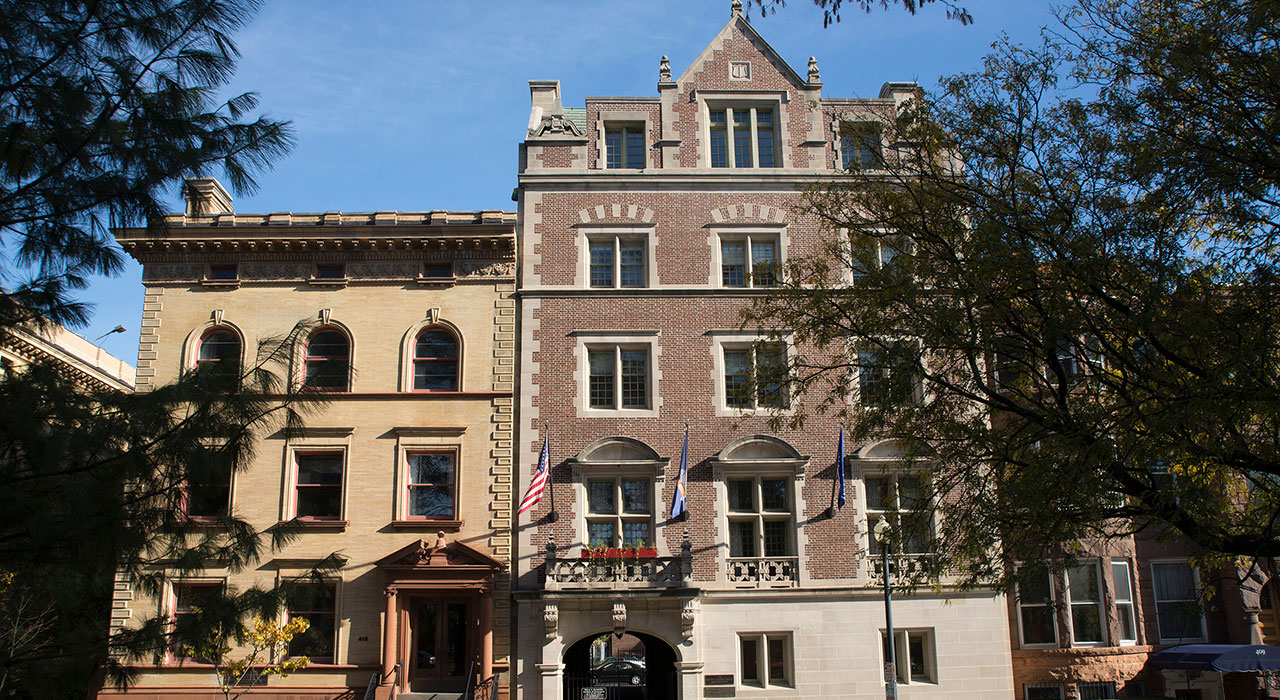
The Nelson A. Rockefeller Institute of Government is a public policy think tank founded in 1981 that conducts cutting-edge research and analysis to inform lasting solutions to the problems facing New York State and the nation.
The Institute’s mission is to improve the capacities of communities, state and local governments, and the federal system to work toward genuine, evidence-based solutions.
Through rigorous, objective, and accessible analysis and outreach, we give citizens and governments reliable facts and tools to understand public problems and inform public decisions.
The mission of the Nelson A. Rockefeller Institute of Government of SUNY is to improve the capacities of communities, state and local governments, and the federal system to work toward genuine solutions to the nation’s problems. Through rigorous, objective, and accessible analysis and outreach, the Institute will give citizens and governments facts and tools relevant to public decisions. It will also research and promote changes aimed at improving how public institutions operate, such as how they work across institutional divisions to solve common problems, use and generate evidence, and execute challenging responsibilities.
The Institute embodies the belief that universities and colleges can improve governance through research, expert advice, training for public service, and public dissemination and engagement. This premise echoes and extends SUNY’s mission statement, which calls for the university to share its expertise with “the business, agricultural, governmental, labor, and nonprofit sectors of the state through a program of public service.” The Institute’s grounding in universities also undergirds how it performs its mission — to educate based on open inquiry and scientific principles, not advocate particular interests or ideological views.
The Institute’s mission is broad and can be adapted to future, yet-unknown public problems. In the next decade, however, the Institute expects to address the following challenges, among others: