
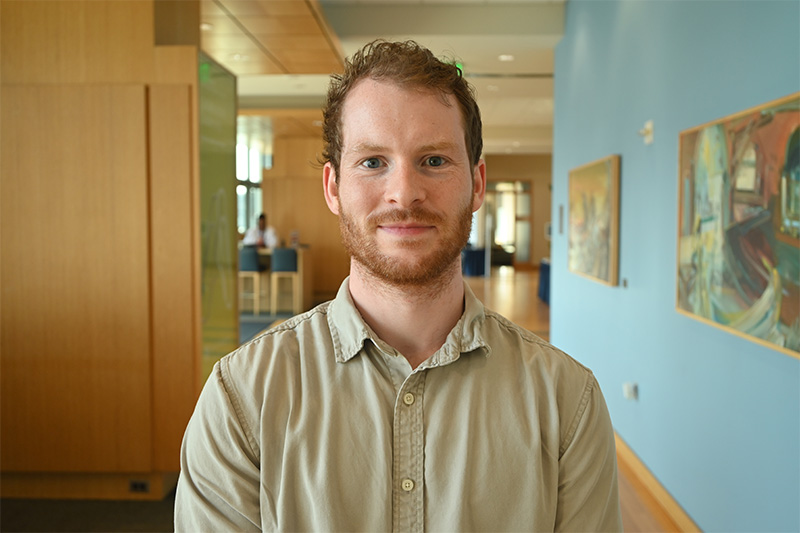
Experts with the Regional Gun Violence Research Consortium (RGVRC) address different facets of firearm violence from a variety of perspectives and disciplines. In this new series, get to know our experts and learn more about their contributions to better understand, prevent, and respond to the public health crisis of firearm violence. Get to know William Wical, an affiliate scholar with the RGVRC and a postdoctoral research fellow at the Johns Hopkins Bloomberg School of Public Health in the Center for Gun Violence Solutions.
Why do you study gun violence? Why is this an important area of research, and how do you see your work helping to address this issue?
Gun violence is one of the most significant racial inequities in the United States—impacting poor Black men and their communities at dramatically higher rates compared to their white peers. I study the experiences of these men, focusing on healing, prevention, and care as an acknowledgement that the attendant consequences of firearm violence extend far beyond the initial incident. I believe this work is vital to expand the kinds, quality, and availability of supportive services for those impacted by violence (including survivors, family and friends, and community members). I see my work as a first step in centering the perspectives and goals of Black men who survive a gunshot wound in working toward improved modes of care.
What is your research focus related to gun violence? What are you currently researching?
I am a medical anthropologist whose research focuses on the emotional experiences of Black men who survive gunshot wounds and participate in a hospital-based violence intervention program (HVIP). I use long-term ethnographic methods to explore how these men narrate their experiences, determine what constitutes effective violence prevention, and subjectively experience trauma. In examining how HVIP participants interpret their emotional experiences related to trauma, healing, and loss to make claims about society, themselves, and justice, I seek to challenge the dominant politics of care for Black men who survive gunshot wounds—including by troubling the use of trauma as the primary analytic for understanding their experiences and emphasizing the need to center racial justice in caregiving.
As a postdoctoral fellow, I am currently publishing findings from my dissertation project and working on a community-engaged project focusing on the importance of shared language in discussing firearm violence. In these two areas of my work, I am committed to pushing the boundaries of how we understand and talk about violence, prevention, and care.
What do you hope that people can take away from the research you are conducting?
I hope people who engage with my work take away a sense of the deep challenges that Black men who survive a gunshot wound face when seeking to heal from their injuries and the need for our modes of caring to rise to these challenges. I am particularly interested in people understanding how these barriers to health are deeply ingrained in American society—and the need for radical social change in order to address them.
Learn more about Will and her work for the Regional Gun Violence Research Consortium below.